

Therapy Services at Resurrected Living
After experiencing trauma, the effects of what you went through can change how your brain and body function. At Resurrected Living, we collaborate with you to restore balance from within before addressing the external challenges that affect your daily life.
We Recognize the Impact of Abuse and Trauma
We're here to help you heal from a wide range of traumatic experiences, including:
Early childhood abuse
Sexual assault
Domestic violence
Physical violence
We understand that every experience is unique. Whether your story involves abuse or the deep pain of losing someone or something meaningful, your healing still matters.
Abuse versus Trauma, what’s the difference?
→ Abuse refers to behaviors and actions that cause harm to another person.
→ Trauma is the internal and lasting effect of that harm or any event that overwhelms your capacity to cope
Understanding this difference helps us focus not only on what happened but also on how your body has learned to protect you and how to gently guide it toward restoration.

Types of Abuse Addressed at Resurrected Living
-
Involves physical contact intended to cause harm or fear. Examples include slapping, pushing, kicking, or punching.
-
Uses words or actions that harm self-esteem and emotional stability. Examples include neglect, humiliation, criticism, or manipulation.
-
Instills fear and confusion through control or intimidation. Examples include gaslighting, stonewalling, or isolation.
-
Occurs when consent is not freely given for sexual acts. Examples include coercion, manipulation, or abuse of authority.
-
Uses faith or belief systems to control, shame, or manipulate. Examples include misuse of scripture, guilt-based teachings, or exploitation of trust within a faith community.

Occupational Therapy Based Treatment for Survivors of Abuse and Sexual Trauma
We offer holistic and practical treatment options designed to support both healing and growth.
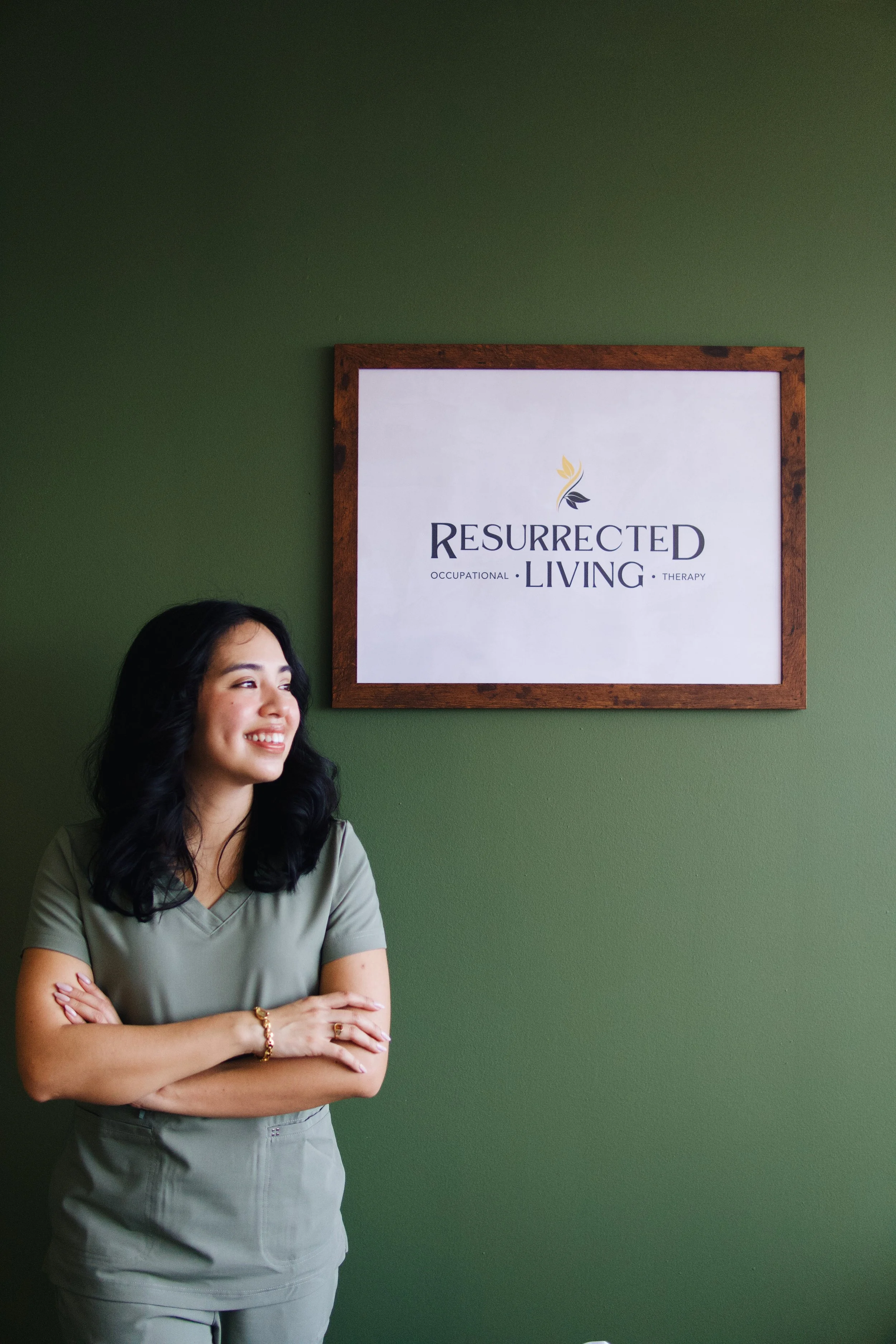
At Resurrected Living, each treatment plan is personalized to integrate with your daily routines, goals, and lifestyle. You’ll work directly with licensed occupational therapist Stephanie Poma, who brings both professional expertise and lived understanding of how occupational therapy can support recovery after trauma.
As occupational therapists, we recognize the powerful capabilities of the body and its senses. We begin by helping your body regulate before shifting toward a solution-based approach to your goals.
Occupational therapy embraces the person as a whole.
Occupational therapy embraces the person as a whole.
Why Occupational Therapy?
You are a person with unique roles, habits, and environments that shape your everyday life. But what happens when you can’t seem to meet the goals you have in mind or complete the daily tasks you once could?
You might notice challenges with emotions, relationships, or motivation. You may find yourself relying on coping mechanisms that no longer serve you, or avoiding responsibilities because they simply feel too overwhelming.
Occupational therapy helps you rebuild connection to your daily life by addressing how your body and mind work together. We focus on helping you regulate internally so you can begin showing up externally in ways that feel aligned, meaningful, and sustainable.


To Talk It Out Is Crucial.
To Walk It Out Is Pertinent.
When trauma stems from experiences of abuse or harm, activities and even relationships that once brought meaning may now feel distant. This is not because you lack motivation, but because your body is naturally trying to find safety again, even when you don’t realize it.
At Resurrected Living, we focus on helping your body experience that sense of safety so your brain can start to engage fully in the life you want to live.
Why a Sensory-Based Approach?
Your senses are the first bridge between your body and your brain, forming even before you were born. They help you interpret the world, connect with others, and understand safety.
When trauma interrupts those connections, your nervous system can remain on alert long after the danger has passed. This “survival mode” can make everyday experiences like focusing, resting, or feeling connected, much harder than they should be.
Through a sensory-based approach, we work together to rebuild that bridge so your body and mind can begin moving in the same direction again. This process helps you regulate in the moment, reconnect with safety, and rewire the parts of your brain that store peace and balance.

Experience the fullness of healing and move beyond survival into living.
Experience the fullness of healing and move beyond survival into living.
A sensory-based approach can help you:
Reconnect with your body and feel more attuned to its signals
Recognize your emotions and understand how they show up in daily life
Reduce hypervigilance and build a deeper sense of safety
Strengthen new and positive connections in your brain
Integrate stored memories so they feel less overwhelming
Expand your capacity for calm, confidence, and resilience
When your internal world finds balance, your external goals, relationships, focus, confidence, and daily rhythms begin to flourish naturally.
How Trauma Affects Daily Life
Trauma-related symptoms can affect many areas of life including your routines, relationships, focus, and even physical health. You may find yourself struggling to meet goals, feeling disconnected from the things that once brought you joy, or noticing patterns that seem difficult to change.
Common symptoms related to trauma may include the following:
Low self-esteem
Hypervigilance or irritability
Sleeping difficulties or fatigue
Challenges with managing emotions
Difficulty concentrating or remembering
Chronic stress
Flashbacks or nightmares
Dissociation or emotional numbing
Avoidance behaviors
Headaches, muscle tension, or digestive issues
Self-blame, shame, or guilt
Relationship challenges
Feeling overwhelmed or disorganized

Healing starts with understanding what your body has been holding. As you explore these signs, remember that restoration is possible and support is available when you’re ready.
YOUR HEALING JOURNEY MAY LOOK LIKE:
At Resurrected Living, each session is intentionally shaped around your unique needs and goals.
Together, we focus on helping your body, mind, and spirit move toward alignment so that healing feels integrated and not separate from the life you’re building.
-
• Identifying the habits, environments, and patterns that keep you stuck
• Building sensory-based tools that help you regulate in real time
• Learning how to manage triggers before they take over your day
• Reconnecting with activities that bring purpose, rest, and fulfillment
• Developing structure and rhythm that align with your values and goals
• Creating meaningful steps toward the version of yourself you’ve been hoping to meet
Every step is guided by collaboration and curiosity. You’ll gain not only the tools to regulate but also the confidence to sustain change long after our work together ends.

Begin Your Next Chapter. Healing is not the end. It’s the foundation for fully living.
If you’re ready to take the next step in your journey, schedule your free 20-minute consultation and begin walking toward the life you’ve been waiting to live.